The state's September 3 report is real progress, and every number in it describes what happened after a theft. Read for retail and commercial operators planning fourth-quarter security.
The state's September 3 report is real progress, and every number in it describes what happened after a theft. Read for retail and commercial operators planning fourth-quarter security.
On September 3, the Governor's office published its quarterly accounting of California's organized retail theft program: 35,907 arrests, 28,667 cases referred for prosecution, and more than 293.4 million dollars in stolen goods recovered since October 2023. In the most recent quarter alone, agencies made 3,294 arrests and the value of recovered goods rose 12.9 percent.
Those are real numbers from real operations, and some of them happened in Los Angeles. But every figure in that report describes something that happened after a theft. A recovery is not a prevention. For a retail or commercial operator building a fourth-quarter security plan this month, the useful reading of the report is the part it does not say out loud: enforcement handles the aftermath, and the property still handles the front end.
The program runs on 242 million dollars distributed by the Board of State and Community Corrections to 38 law enforcement agencies, plus 24 million dollars to 13 district attorneys for vertical prosecution, where one prosecutor follows a case from investigation to resolution. Among those prosecution grantees, 3,027 people have been convicted of theft-related property crimes, including 885 felony convictions.
The Los Angeles entries are worth reading closely. The Los Angeles Police Department served three search warrants in a cargo theft investigation and impounded 84 stolen container chassis and 25 vehicles, recovering more than five million dollars in goods along with handguns and more than 300,000 dollars in cash. The Los Angeles County Sheriff's Department ran a surveillance operation in Cerritos against a South American theft group, then a separate investigation that seized 200,000 dollars in merchandise stolen from nine retailers, along with nine firearms.
Two things stand out. First, cargo and warehouse theft is now a headline item in a retail theft report, which tells you where organized crews have moved. Second, firearms appear in both Los Angeles operations. The people being arrested in these cases are not shoplifters.
The report also notes that Penal Code section 487(e) now allows prosecutors to aggregate thefts across multiple incidents, which is how a series of small losses becomes a felony case. That only works if each incident was documented.
Statewide, the report says property crime fell 14.3 percent and robbery fell 19.9 percent in 2025. That is good news and it is also an average across 58 counties. It says nothing about your loading dock on a Saturday in December.
Enforcement capacity has three limits a property manager should understand. It arrives after the loss. It prioritizes networks over individual incidents, which is the correct strategy for the state and a slow one for a single store. And it depends on evidence the property either preserved or did not. A theft that was never documented, on camera footage that was overwritten, cannot be aggregated, referred, or prosecuted. It simply becomes shrink.
This is where the difference between security providers shows. A provider that treats a post as a body in a uniform gives you deterrence while the officer is standing there and nothing afterward. A provider that runs documentation as a discipline gives you deterrence plus a record: an incident report written the same day, a timestamped patrol log, footage flagged for retention before the overwrite cycle takes it. The second kind of provider is the one whose reports end up in a prosecutor's aggregated case.
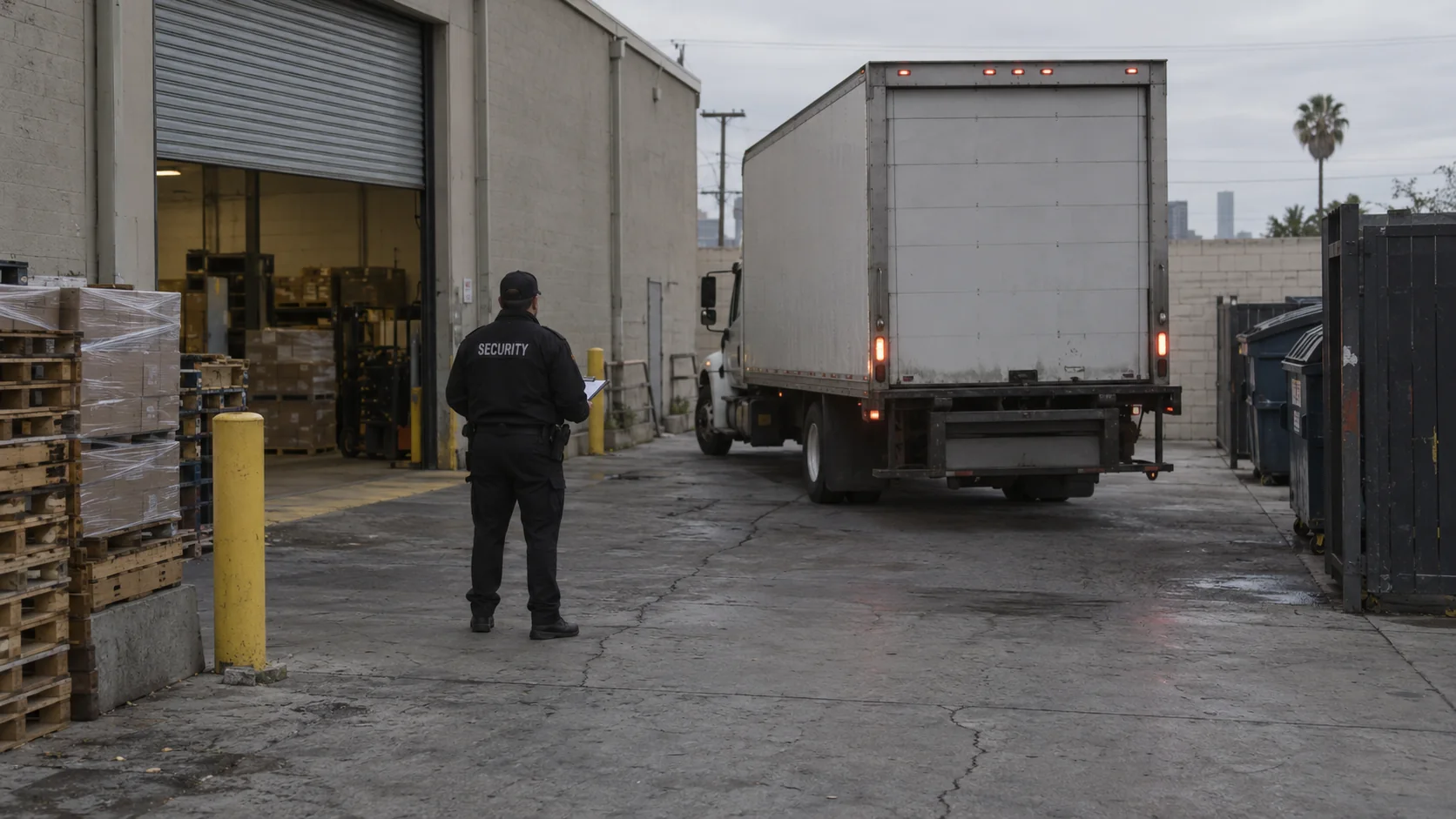
Holiday staffing decisions for retail and commercial properties are typically made in September and October. The state's report is a reasonable input to that decision, read correctly. Organized crews are active, armed in some cases, and increasingly interested in cargo and back-of-house. The state is arresting them, after the fact. The property's own layer, the visible presence at the door and the loading dock, the procedures staff actually follow, and the evidence trail, is the layer that decides whether a crew picks your address or the one next door.
Valcor Group Inc. operates under California PPO license 122608. Every shift on a Valcor post produces a record: geofenced clock-in at the property, a daily activity report, and an incident report written the same day for anything that happened. That documentation discipline exists for exactly the reason this report illustrates. An arrest happens because someone kept the evidence. On a Valcor post, that someone is on the clock.
If you operate retail, commercial, or logistics space in Los Angeles and have not settled fourth-quarter coverage, September is the month to do it.
Tell us about your property, your threat profile, or the scope you need covered. We respond within 24 hours on business days.
Contact ValcorOr call (424) 244-0943